How IEEE C57.91 turns a heat wave into transformer loss-of-life
A plain-language walk through the thermal aging model utility engineers rely on, and how public weather data feeds it.
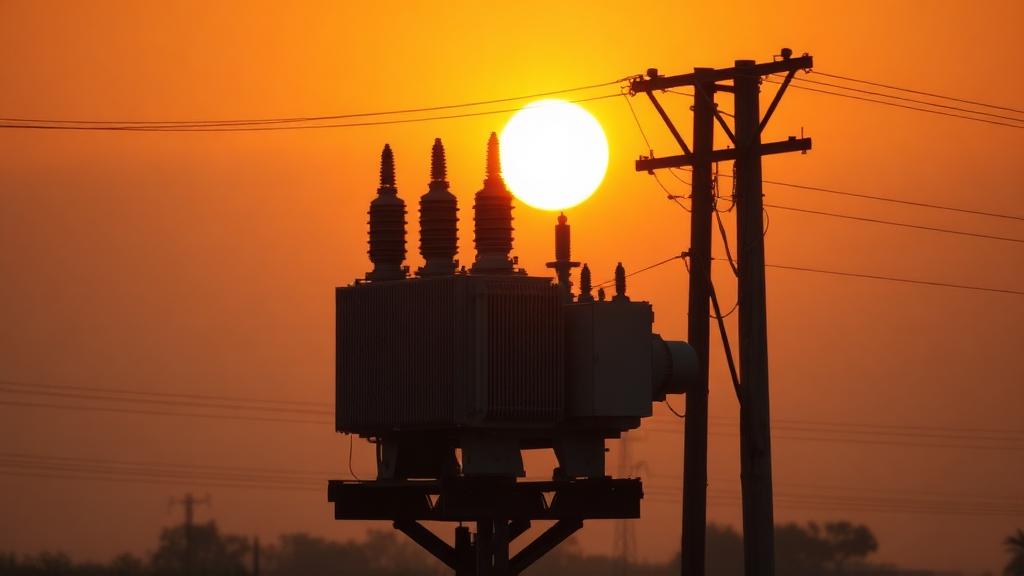
Distribution transformers rarely fail on the hottest day of the year. They fail later, after many hot days have quietly consumed the insulation life that keeps them running. IEEE C57.91 is the loading guide that lets you put a number on that wear.
From ambient temperature to hot-spot temperature
The standard models how ambient conditions and load combine to drive the transformer's top-oil and winding hot-spot temperatures. The hot-spot is what matters: insulation ages exponentially with it, so a few degrees can meaningfully change the rate of wear.
- Ambient temperature sets the baseline the transformer operates above.
- Load factor drives the rise from ambient to top-oil to hot-spot.
- Thermal time constants smooth short spikes and accumulate sustained heat.
Why public data is enough to start
You do not need proprietary sensors to estimate exposure. Hourly NOAA observations give you the ambient signal, and a reasonable load profile gives you the rest. climagrid computes per-unit loss-of-life so you can rank which units a given heat event aged the fastest.
The goal is not to predict the exact day a transformer fails. It is to know which transformers the weather has been hardest on.